An automatic pet feeder stores food and releases measured portions at scheduled times. It can help maintain a routine when work runs late or mornings get hectic. But it is not a tiny pet nanny. You still need to check that your animal is eating, drinking, and acting normally.
So, how does an automatic pet feeder work? Most models use a food hopper, a timer, and a motorized dispenser. You set meal times and portion sizes on the device or in its app. At the chosen time, the motor moves kibble through a chute into a bowl. Some feeders also record meals or send alerts. Simple machines, with limits.
Veterinary nutritionist Dr. Lisa Weeth is a useful expert reference when considering portion control and feeding routines. A practical takeaway, paraphrased rather than presented as her exact words, is: “Use feeding technology to support a suitable diet, not to replace attention to your pet.” That distinction matters. A programmed serving may still be wrong for an individual animal, especially if its needs change.
The details count. Kibble size can affect dispensing, and a curious paw may test a loose lid. Power or Wi-Fi interruptions can also disrupt some models. Check portions with a measuring cup, clean food-contact parts, and watch the bowl after scheduled meals. Not glamorous, but worthwhile. This guide explains feeder types, their dispensing mechanisms, and what to consider before relying on one. An automatic feeder can make routines steadier; it cannot tell you why dinner went untouched.
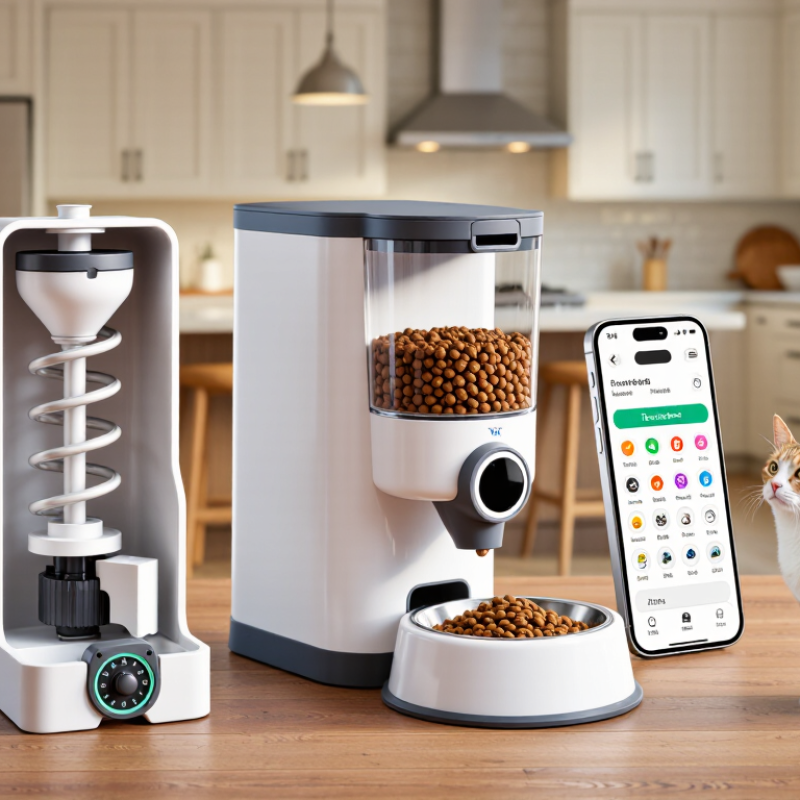
An automatic pet feeder is a device that stores food and releases set portions at chosen times. Most models are designed for dry food, using a hopper and a rotating or sliding mechanism to move kibble into a bowl. Some simpler feeders use a timer and compartments instead. The exact design varies. At breakfast, for example, a feeder might drop a measured amount while the owner is away. A small motor, clock, and control panel often manage the process. Not magic.
The feeder’s main purpose is routine: it can make meal times more predictable when a person cannot be home. Some devices allow several daily settings, while others offer only basic scheduling. Portion sizes are not always exact, especially when kibble shapes differ or food gets stuck. It helps to test the setting with a measuring cup and check what actually lands in the bowl. I would not treat the displayed portion as unquestionable. An automatic feeder also cannot assess appetite, notice illness, or replace fresh water and human attention. For pets with special diets or feeding needs, a veterinarian can help determine whether a timed device is appropriate.
An automatic pet feeder stores food and releases portions on a schedule. Its main parts are a hopper, a dispensing mechanism, a control unit, and a bowl. The hopper holds dry kibble; its shape and capacity affect how easily food flows. Kibble size matters. Uneven pieces can bridge inside the outlet, so the scheduled portion may not match the portion actually dispensed.
Inside the base, a motor usually turns an auger or rotating wheel to move food downward. The control unit sets meal times and portion counts, while a display or buttons let caregivers adjust them. Some models also include a scale, camera, or phone connection. Useful, but not infallible. A power cord may be backed by batteries, which help during outages. Keep the unit on a level surface and check portions with a kitchen scale; settings are not always precise.
The bowl catches each serving, and some feeders use sensors to detect remaining food or a jam. These sensors can help, though crumbs and dust may interfere. The American Pet Products Association’s 2025 State of the Industry Report estimated U.S. pet-industry spending at $152 billion in 2024. That figure reflects broad investment in pet care, not proof that any feeder measures food accurately. For a new device, compare its portion output with your pet’s feeding plan, clean food-contact parts regularly, and watch whether the mechanism dispenses consistently. A small check can prevent a surprisingly large missed meal.
An automatic pet feeder holds dry food in a covered hopper and releases measured portions on a schedule. When feeding time arrives, a timer activates a small motor. In many designs, the motor turns an auger or rotating disk near the hopper’s base. This movement carries kibble toward an opening. Gravity then guides the food down a chute and into the bowl.
The mechanism differs by model. An auger pushes food forward, while a rotating disk may drop kibble through an opening. Portion size depends on the feeder’s design and the food’s shape and size, so a programmed serving may not match an exact weight. Watch a few cycles before relying on the schedule. If kibble bridges over the opening, sticks in the chute, or gathers unevenly, portions can vary. I would not assume every motor sound means food reached the bowl.
Tips: Test several servings with your pet’s usual kibble. Check the bowl afterward, and compare the amount with a kitchen scale if precise portions matter. Keep the hopper and chute dry and clear; even a small crumb can disrupt the next drop.
| Stage | Feeder Part | How Food Moves | Useful Detail |
|---|---|---|---|
| 1. Storage | Food hopper or reservoir | Dry food is held above the dispensing mechanism. Gravity brings food toward the outlet as portions are released. | Capacity and hopper shape vary. Dry food should be kept clean and dry, and the feeder should be refilled as needed. |
| 2. Portion control | Rotating wheel, compartment, auger, or sliding gate | At a scheduled feeding time, a mechanism moves a measured amount of food toward the outlet. The design determines how the portion is formed. | Many feeders use a motor and a rotating or sliding part. Portion size can vary with kibble size and shape, so a setting may not equal an exact weight. |
| 3. Release | Discharge opening | The portion passes through an opening at the bottom of the hopper or metering mechanism. | Food size and shape matter: pieces that are too large or irregular for the opening may not dispense reliably. |
| 4. Transfer | Chute or food channel | Released food travels down a short channel, usually under gravity, into the feeding area. | Keeping the channel clear helps food move freely. Some designs have a wider or more direct route than others. |
| 5. Serving | Bowl or tray | The dispensed food collects in the bowl for the pet to eat. | The bowl may be built into the feeder or removable for cleaning. Many basic models do not detect whether the bowl is empty. |
| 6. Timing and control | Timer, control panel, or connected controller | The controller starts the dispensing mechanism according to a programmed schedule or a manual feeding command. | Power options and scheduling features differ by model. A stored schedule does not necessarily mean the feeder can confirm that food reached the bowl. |
| 7. Possible interruption | Food outlet and moving parts | If food bridges in the hopper, becomes stuck, or does not fit the mechanism, the portion may be delayed or incomplete. | Use only food types and kibble sizes permitted by the feeder’s instructions, and inspect and clean food-contact parts regularly. |
Note: Automatic pet feeders vary in design. This table describes the general path used by many feeders that dispense dry food; wet-food feeders and other designs may move food differently.
An automatic pet feeder releases food according to a schedule you set. Many models let you choose meal times and portion sizes through buttons or an app. The controls differ, so check the device’s instructions before programming it. Set the clock carefully; a feeder that is several hours off can serve meals at the wrong time. Some displays use grams, while others use portions or cups. These units are not always interchangeable.
Choose feeding times that fit your pet’s routine, then set portions using the food’s feeding guide and your veterinarian’s advice. A suggested serving is only a starting point; age, activity, and health can affect how much a pet needs. Test a programmed meal into a bowl before relying on the schedule. Measure what comes out, especially if pieces vary in size. The setup screen can feel oddly fiddly, and one test may not be enough. Recheck the amount over several meals and watch for uneaten food or changes in appetite.
Tips: Keep the feeder on a level surface, and inspect the food outlet for clogs. After a power interruption or schedule change, confirm the clock and next feeding time. If your pet has a special diet, ask a veterinarian before changing portions.
An automatic pet feeder dispenses food without requiring someone to pour each meal by hand. Gravity-fed models refill a bowl as food is eaten, using a storage container above it. They are simple and need no schedule, but portions depend on how quickly a pet eats. A curious cat may keep returning to the bowl. Simple, but limited.
Timed portion feeders use a motor to release set amounts at chosen times. Many hold dry kibble in a hopper; the opening and kibble size can affect portion accuracy. Check servings with a kitchen scale rather than trusting the setting alone. Rotating-tray feeders reveal separate compartments on a timer, which can help with several small meals or some wet foods. Their capacity is often lower, and wet food needs suitable cooling. Microchip-activated feeders work differently: they open for a recognized pet, helping keep one animal from another’s food, but they do not necessarily schedule meals. Every type needs regular cleaning, and electronic models may need batteries or backup power. Feeders can support a routine, not judge appetite or notice illness. That matters.
Common feeder types differ in how food is released, portions are set, and access is controlled.
Gravity feeders refill a bowl as food is eaten. Programmable hopper feeders dispense selected portions on a schedule, while rotating-tray feeders reveal preloaded compartments at set times. Microchip-activated feeders open for a recognized pet. The chart shows typical core functions: 1 means yes and 0 means no; features can vary by model.
Most have a food hopper, dispensing mechanism, control unit, and bowl. Some also include sensors, a camera, or a scale.
A motor turns an auger or rotating disk near the hopper’s base. Kibble then travels through an opening and chute into the bowl.
Kibble size and shape can affect how food flows. Pieces may bridge at the outlet or stick in the chute.
Run several test servings using your pet’s usual food. Weigh each serving on a kitchen scale and compare it with the feeding plan. One test may not be enough.
Set the clock and schedule according to your pet’s routine. Use feeding guidance and veterinary advice; age, activity, and health can change portion needs.
Look for clogs, crumbs, or kibble gathered near the opening. A motor sound alone does not confirm that food was dispensed.
Keep it level, and clean food-contact parts regularly. Check the hopper and chute for dust or crumbs. Small debris can matter.
Confirm the clock and next feeding time, even if backup batteries are installed. Then check that a scheduled portion reaches the bowl.
An automatic pet feeder is a device that dispenses food for a pet at scheduled times, helping make daily feeding more consistent. Its main parts typically include a food container, a dispensing mechanism, a control panel or timer, and a bowl or outlet where the food is delivered. Depending on the design, sensors or a power source may also help operate the feeder and monitor its use.
To understand how does an automatic pet feeder work, food is stored in the container and released when the programmed schedule reaches a feeding time. The mechanism moves a measured portion through an opening or chute into the bowl. Owners can usually set feeding times and portion sizes using buttons, a dial, or a digital interface. Common types include gravity feeders, which refill a bowl as food is eaten, and timed feeders, which release portions on a schedule. Their features differ, so the suitable option depends on a pet’s routine and feeding needs.

PawEase Feeder